

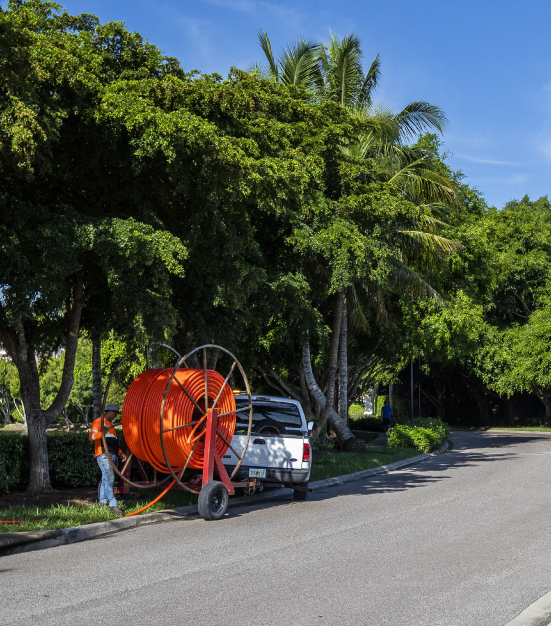
Community Boards routinely make long-term investments in roads, roofs, landscaping, security systems, clubhouses, and other shared assets that contribute to the quality and value of the community.
Communications infrastructure deserves the same thoughtful consideration.
Connectivity has become an essential part of how residents work, access healthcare, learn, communicate, manage their homes, and stay connected. As technology continues to evolve, the decisions a community makes today can influence its ability to meet residents’ connectivity needs for years to come.
For HOA and condominium Boards, that means evaluating communications infrastructure as more than a monthly utility expense. It can be a long-term community asset that deserves careful planning and evaluation.
Key Considerations for HOA & COA Boards
Communications infrastructure is a long-term community asset.
Consumer technology can change rapidly, but the infrastructure supporting connectivity is designed to serve communities for many years.
The infrastructure a community selects today can influence its ability to accommodate increasing bandwidth demands, emerging technologies, and changing resident expectations.
Choosing scalable, high-quality infrastructure can help reduce future disruptions and the need for costly, disruptive upgrades.
That’s why Boards should consider not only what a network can deliver today, but also how well it can adapt to tomorrow’s needs.
Consider total value—not just upfront costs.
The lowest-cost proposal may not always deliver the greatest long-term value.
When evaluating communications investments, Boards should consider the complete picture, including:
- Network reliability
- Performance and capacity
- Service and customer support
- Local operational resources
- Scalability
- Infrastructure ownership and maintenance
- Upgrade capabilities
- Provider experience
- Long-term investment in the community
A competitive price is important, but the value of a communications agreement extends well beyond the monthly rate.
Communities should plan for technology that doesn’t exist yet.
One of the challenges of long-term technology planning is that it’s impossible to know exactly what the next decade will bring.
Artificial intelligence, connected buildings, smart community applications, advanced healthcare technologies, electric vehicle infrastructure, and other emerging technologies are changing how people interact with technology.
The goal isn’t to predict every technology that will become important. It’s to select infrastructure that gives the community the capacity and flexibility to adapt as technology evolves.
Infrastructure decisions affect the resident experience.
Reliable connectivity has become an important part of modern community living.
Residents increasingly depend on internet access for work, education, entertainment, communication, security, smart-home technology, and other everyday activities.
When connectivity is dependable and supported by strong infrastructure, it can contribute to a better resident experience.
For Boards, this makes communications infrastructure more than a technology decision. It can also be a consideration in resident satisfaction and the overall appeal of the community to current and prospective homeowners.
Selecting the right partner is as important as selecting the right technology.
Infrastructure is only part of the equation.
Communities also benefit from working with providers that demonstrate operational experience, responsive customer support, local expertise, and a long-term commitment to maintaining and improving the network.
A communications provider isn’t simply delivering a service during the term of an agreement. Ideally, the provider becomes an ongoing partner in supporting the community’s evolving connectivity needs.
Boards should therefore evaluate both the infrastructure being proposed and the organization standing behind it.
Board Planning Insight
Infrastructure decisions often have a lifespan measured in years—or even decades.
When evaluating communications investments, Boards should think beyond today’s service offerings and consider how the provider’s network, technology roadmap, operational support, and long-term commitment will continue serving residents into the future.
A strong long-term connectivity strategy considers three things:
- What does our community need today?
- What might residents need tomorrow?
- Is the infrastructure and provider we’re selecting capable of supporting both?
Questions to Ask Before Making a Long-Term Connectivity Investment
Before making a long-term communications infrastructure decision, consider asking prospective providers:
1. How well does this solution align with our community’s long-term technology and infrastructure goals?
2. Will the proposed infrastructure support our community’s needs for the next 10–20 years?
3. How easily can the network scale as resident expectations and technology continue to evolve?
4. What is the provider’s plan for maintaining and upgrading the network throughout the agreement?
5. Does the provider own, operate, and maintain the infrastructure serving our community?
6. What level of local support and partnership can our Board and residents expect over the life of the agreement?
7. Can the provider demonstrate a successful history of supporting communities similar to ours?
8. When considering reliability, scalability, resident experience, and long-term value, is this the right investment for our community—not just today, but for the future?
These questions can help Boards evaluate a communications proposal as a long-term infrastructure decision rather than simply comparing monthly service costs.
The Bottom Line
Communications infrastructure has become a critical component of modern community living.
By viewing connectivity as a long-term infrastructure investment rather than simply a monthly utility expense, Boards can make decisions that support resident satisfaction, operational needs, and future technology demands.
The most important question isn’t simply: “What does this network provide today?”
It’s: “Will this investment continue to serve our community well as technology and resident expectations evolve?”
Thoughtful infrastructure planning today can help communities build a stronger foundation for how residents will live, work, and stay connected for years to come.
Explore More Community Connections
Insights to help Florida community associations make informed connectivity and infrastructure decisions.
Understanding the Value of Bulk Internet Agreements for HOA & COA Communities
Infrastructure Matters: How Florida Communities Can Prepare for Severe Weather
How Internet Connectivity Is Shaping Property Values in Florida’s HOA and Condo Communities